
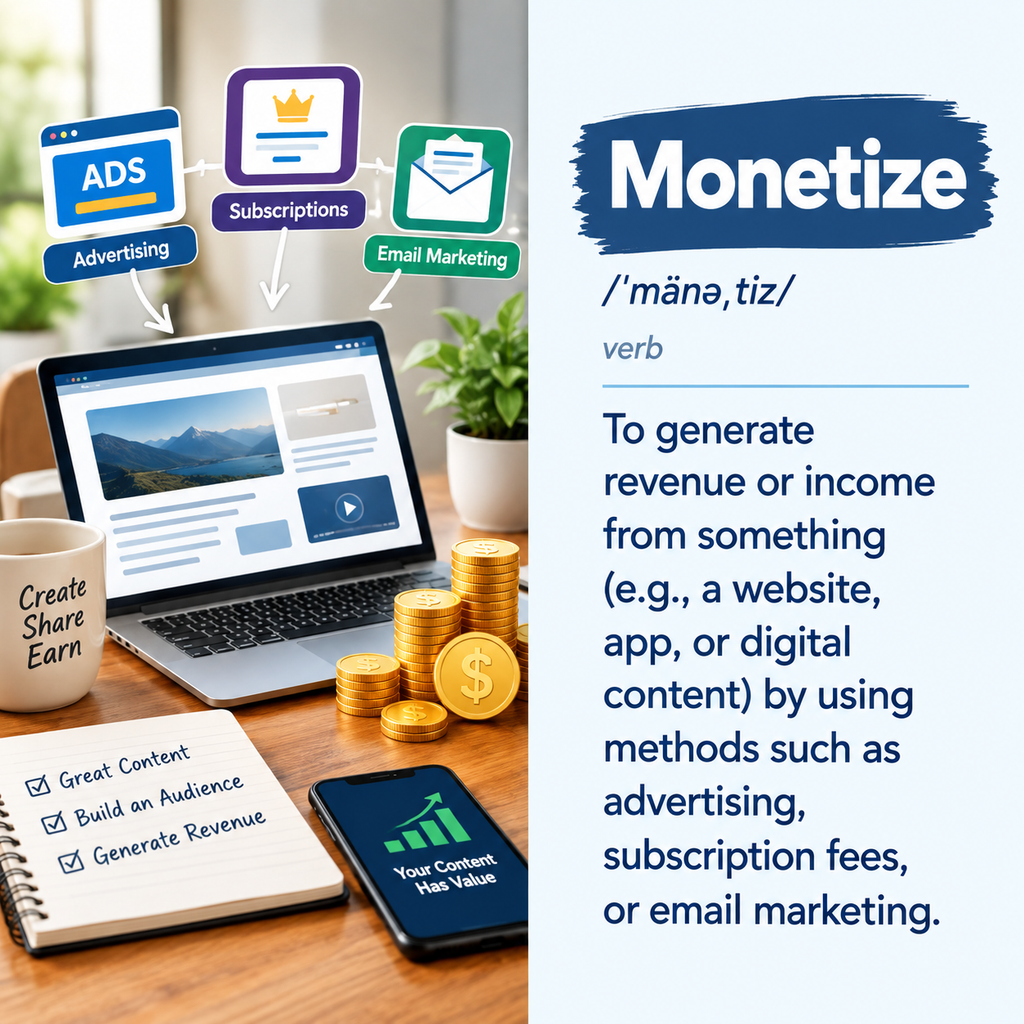
How to Monetize a Website, App, or Digital Content: 3 Proven Ways to Make Money Online
How to Monetize a Website on the internet has created an incredible opportunity for entrepreneurs, creators, and small businesses. Today, a website, mobile app, blog, YouTube channel, podcast, newsletter, or social media platform can become much more than a place to publish content.
It can become a digital business asset capable of generating revenue.
But how do you actually make money from digital media?
There are many answers to that question. Some businesses sell products and services. Others use affiliate marketing, sponsorships, digital products, or online courses.
Three of the most common and accessible strategies are advertising, subscription fees, and email marketing.
When combined with valuable content and a targeted audience, these strategies can create multiple opportunities for generating online revenue.
In this guide, we’ll explore how digital monetization works and how you can use these methods to turn your website, app, or content into a potential income-producing business.
What Is Digital Media Monetization?
Digital media monetization is the process of generating revenue from digital content, platforms, audiences, or online services.
In simple terms, you create something people find valuable, attract an audience, and then find appropriate ways to generate income from that audience.
For example, a website could generate revenue by displaying advertisements.
A mobile app could offer premium features through a monthly subscription.
A blogger could build an email list and promote relevant products or services.
A YouTube creator could generate revenue through advertising, sponsorships, memberships, or products.
The underlying principle is simple:
Create value → attract an audience → build trust → monetize the relationship.
This is the foundation of many successful online businesses.

1. Monetize Your Website or App With Advertising
One of the most familiar ways to monetize digital content is through advertising.
The basic concept is straightforward.
You create content that attracts visitors. Advertisers want to reach those visitors. Advertising platforms connect businesses with audiences and provide opportunities for publishers and creators to generate revenue.
Website advertising can include:
- Banner advertisements
- Display advertisements
- Native advertising
- Sponsored content
- Video advertisements
- In-app advertisements
- Sponsored placements
Mobile apps can use similar advertising models, including banner ads, video ads, interstitial advertisements, and rewarded advertising.
How Website Advertising Revenue Works
Advertising revenue can be calculated in different ways depending on the advertising platform and arrangement.
Some advertising models are based on impressions, while others are influenced by clicks, conversions, or other actions.
This means that simply adding advertisements to a website doesn’t automatically create substantial income.
Traffic matters.
But the quality and relevance of that traffic can matter just as much.
A website with a highly targeted audience may be attractive to advertisers because its visitors have a specific interest or purchasing intent.
For example, a website about entrepreneurship may attract businesses selling software, educational programs, business services, or productivity tools.
A website about photography could attract companies selling cameras, lenses, editing software, and accessories.
The more relevant the audience, the more useful the advertising opportunity can become.
Don’t Sacrifice User Experience for Advertising Revenue
One of the biggest mistakes new website owners make is placing too many advertisements on their pages.
While advertisements can generate revenue, excessive advertising can make a website difficult to navigate.
Visitors should be able to find your content easily.
Your goal should be to create a website that people want to return to, not one that simply displays as many ads as possible.
A successful advertising strategy balances three things:
Traffic + valuable content + good user experience.
When those elements work together, advertising becomes part of the business model rather than an obstacle to the audience.
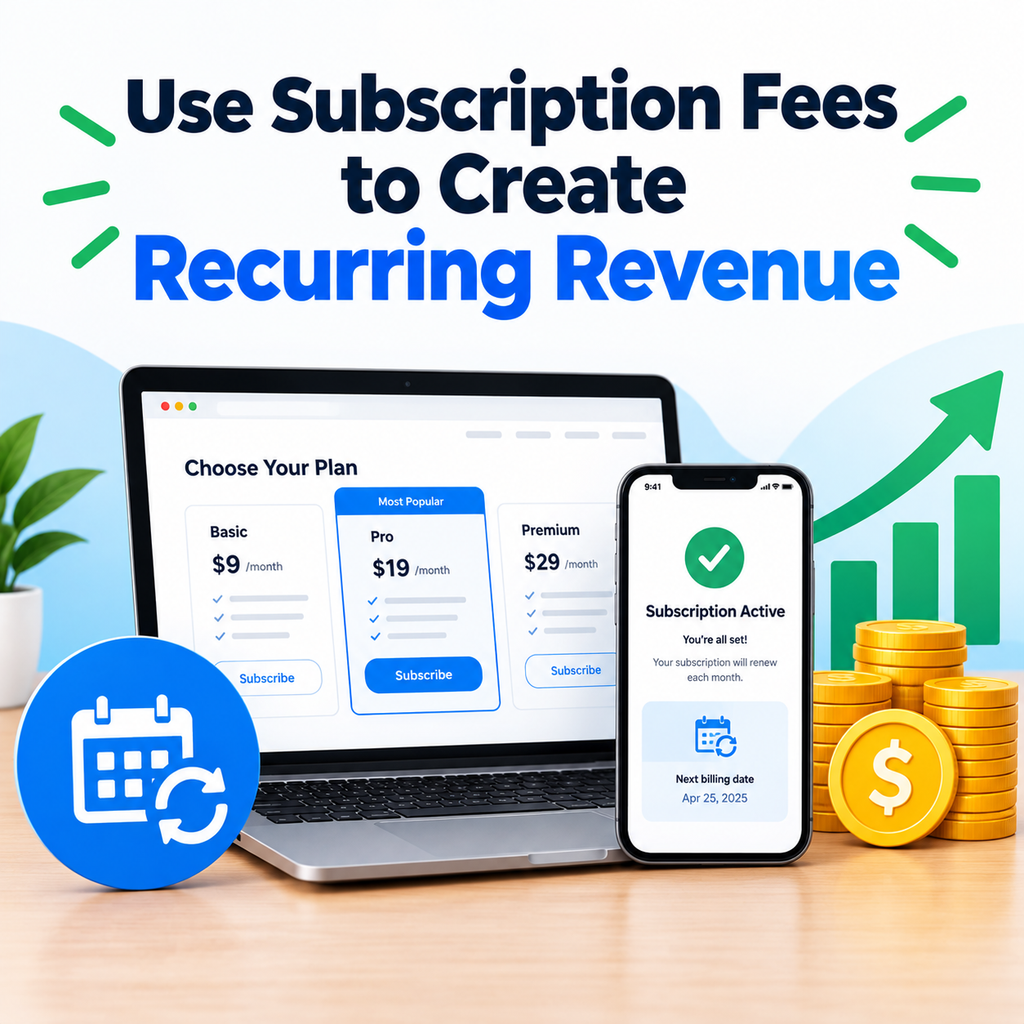
2. Use Subscription Fees to Create Recurring Revenue
Advertising isn’t the only way to monetize a website or app.
Another powerful strategy is the subscription business model.
Instead of charging customers only once, you provide ongoing value in exchange for recurring payments.
Subscription businesses are now common across many areas of the digital economy.
Examples include:
- Membership websites
- Premium newsletters
- Online communities
- Software platforms
- Mobile apps
- Online education
- Premium video content
- Digital training
- Research services
- Exclusive content platforms
The concept is simple:
Give people a compelling reason to continue subscribing.
That reason might be convenience, education, entertainment, exclusive content, access to tools, community, or specialized information.
The Freemium Model
One popular approach is the freemium model.
With this strategy, users can access a basic version of your product or content for free while paying for premium features.
For example, a mobile app might allow users to access basic tools without paying while offering advanced features through a monthly subscription.
A website might publish free articles while reserving detailed reports, training, or resources for paying members.
A newsletter could provide free weekly information while offering a premium version with additional research and exclusive content.
The free version helps attract an audience.
The premium version creates an opportunity to generate revenue.
Why Recurring Revenue Matters
One of the biggest advantages of a subscription model is recurring revenue.
Consider a hypothetical example.
If 500 customers paid $10 per month for a digital membership, the business would have $5,000 in monthly subscription revenue before expenses, taxes, refunds, and applicable platform fees.
The challenge is retention.
Subscribers need to continue seeing value in the product or service.
That means a subscription business must continually improve the customer experience and provide reasons for people to remain members.
The objective isn’t simply to get someone to subscribe.
It’s to build something they don’t want to leave.

3. Use Email Marketing to Monetize Your Audience
One of the most powerful tools available to an online business is email marketing.
Why?
Because visitors may come and go.
Social media platforms can change their algorithms.
Search rankings can fluctuate.
Advertising costs can increase.
But when people voluntarily subscribe to your email list, you have a direct communication channel with an audience that has already shown interest in your content or business.
Email marketing can be used to:
- Build relationships
- Share useful information
- Promote products
- Announce new content
- Offer discounts
- Promote services
- Generate repeat business
- Recommend affiliate products
- Promote subscriptions
- Drive traffic back to your website
For many digital businesses, an email list can become one of their most valuable assets.
Give People a Reason to Join Your Email List
Simply placing a box on your website saying “Subscribe to our newsletter” may not be enough.
People need a reason to give you their email address.
One effective strategy is to offer a useful free resource.
This is often called a lead magnet.
Examples include:
- Free ebooks
- Checklists
- Templates
- Guides
- Video training
- Resource lists
- Free courses
- Special reports
- Discounts
- Exclusive newsletters
For example, a website about online business might offer a free guide called:
“10 Steps to Start Building an Online Business.”
A visitor enters their email address to receive the guide.
Now you’ve created the beginning of a relationship.
Email Marketing Is About Building Trust
One of the biggest email marketing mistakes is turning every message into a sales pitch.
People don’t want an inbox filled with advertisements.
Effective email marketing usually combines education, information, entertainment, and relevant offers.
For example, imagine you’re running a website about digital marketing.
You could send an email explaining how to attract more website visitors.
You could then discuss how email marketing helps convert visitors into long-term followers.
Finally, you could introduce a relevant product, service, course, or tool.
The promotion becomes a natural extension of the information you’re providing.
A useful principle is:
Educate first. Build trust. Then make relevant offers.
Combining Multiple Website Monetization Strategies
The greatest opportunity may not come from choosing just one monetization strategy.
Instead, consider creating a digital ecosystem where different revenue streams support one another.
Imagine you operate a website about entrepreneurship.
You publish helpful articles that attract visitors from search engines.
You monetize some of that traffic with advertising.
You offer visitors a free business guide in exchange for their email address.
Your email newsletter provides useful business information and introduces relevant products and services.
You offer a premium membership containing advanced training.
You could eventually create an app that provides additional tools or resources.
Now you have several interconnected components:
Content → Traffic → Email Subscribers → Trust → Products → Subscriptions → Revenue
Each part supports the next.
This can be far more powerful than relying entirely on one source of income.
Content Is the Foundation of Digital Monetization
No matter which monetization method you choose, content is often the foundation.
People need a reason to discover your website, download your app, watch your videos, read your articles, or subscribe to your newsletter.
That reason is usually valuable content.
Good content can:
- Answer questions
- Solve problems
- Teach skills
- Provide entertainment
- Explain complicated subjects
- Help people make decisions
- Inspire action
- Introduce new ideas
The goal isn’t necessarily to create content that goes viral.
Instead, focus on creating content that is useful to the right audience.
A smaller audience that trusts you and regularly engages with your content can be more valuable to a business than a huge audience that never takes action.
Build an Audience Before Trying to Build a Business
A common mistake is attempting to monetize before building an audience.
Someone launches a website, immediately adds advertisements, creates a membership program, promotes several products, and expects significant income.
Digital businesses generally don’t work that way.
First, you need to give people a reason to pay attention.
Create useful content.
Answer important questions.
Develop your expertise.
Build your brand.
Encourage visitors to join your email list.
Learn what your audience wants.
Then introduce monetization strategies that make sense for them.
Think of the process as:
Content → Traffic → Trust → Relationship → Monetization
Skipping the first steps can make the final step much harder.

SEO Can Help Build Your Digital Audience
If your goal is to monetize a website, search engine optimization (SEO) can play an important role.
SEO involves creating and structuring content so that search engines can understand it and potentially display it when people search for relevant information.
For example, someone might search:
- “How do I monetize my website?”
- “How can I make money from a blog?”
- “Best website monetization strategies”
- “How does email marketing make money?”
- “How to create recurring online income”
Creating high-quality content around topics your target audience is searching for can help attract visitors.
However, SEO isn’t about stuffing an article with keywords.
Modern content should focus primarily on answering the user’s question clearly and thoroughly.
Use keywords naturally in your:
- Page title
- Main heading
- Subheadings
- Introduction
- Body content
- Meta description
- Image descriptions where appropriate
- Internal links
Most importantly, make the content genuinely useful.
Think of Your Website as a Digital Asset
A website shouldn’t be viewed simply as a collection of web pages.
Over time, it can become a digital asset.
A valuable website may contain:
- Search traffic
- An email list
- Original content
- Returning visitors
- Brand recognition
- Products
- Subscribers
- Customers
- Advertising relationships
- Affiliate relationships
- Digital resources
The same principle applies to an app, newsletter, YouTube channel, or online community.
The more useful and established the platform becomes, the more opportunities there may be to monetize it.
The Long-Term Opportunity in Digital Business
The internet has changed what it takes to start a business.
You don’t necessarily need a physical storefront, large office, or huge staff to begin building a digital business.
A computer, smartphone, internet connection, knowledge, and useful idea can be enough to get started.
You could create a blog.
You could launch a newsletter.
You could build an app.
You could start a YouTube channel.
You could create an online community.
You could develop an information website.
Or you could combine several of these into one digital business.
The important thing is recognizing that digital media isn’t simply about creating content.
It is about creating assets and relationships.
A useful article can continue attracting visitors long after it is published.
A helpful video can introduce people to your business months or years later.
An email list can become a direct communication channel with an interested audience.
A subscription service can potentially generate recurring revenue.
An app can become a platform for delivering products and services.
Together, these pieces can create a powerful digital business model.
Final Thoughts: Turn Attention Into Opportunity
Learning how to monetize a website, app, or digital content starts with understanding one fundamental principle:
People create the opportunity, but value creates the business.
Advertising can turn website traffic into revenue.
Subscriptions can create recurring income.
Email marketing can transform visitors into long-term relationships.
SEO can help people discover your content.
And combining several strategies can create multiple paths to revenue.
But successful digital monetization doesn’t begin with advertisements, subscription buttons, or sales emails.
It begins with creating something people actually want.
Create useful content.
Attract the right audience.
Build trust.
Develop relationships.
Then introduce monetization methods that provide additional value.
The goal isn’t simply to make money from clicks, views, or subscribers.
The bigger opportunity is to build a digital asset that can continue attracting attention, creating value, and generating business opportunities over time.
How to Monetize a Website: Start with value. Build the audience. Develop the relationship. Then build the revenue.